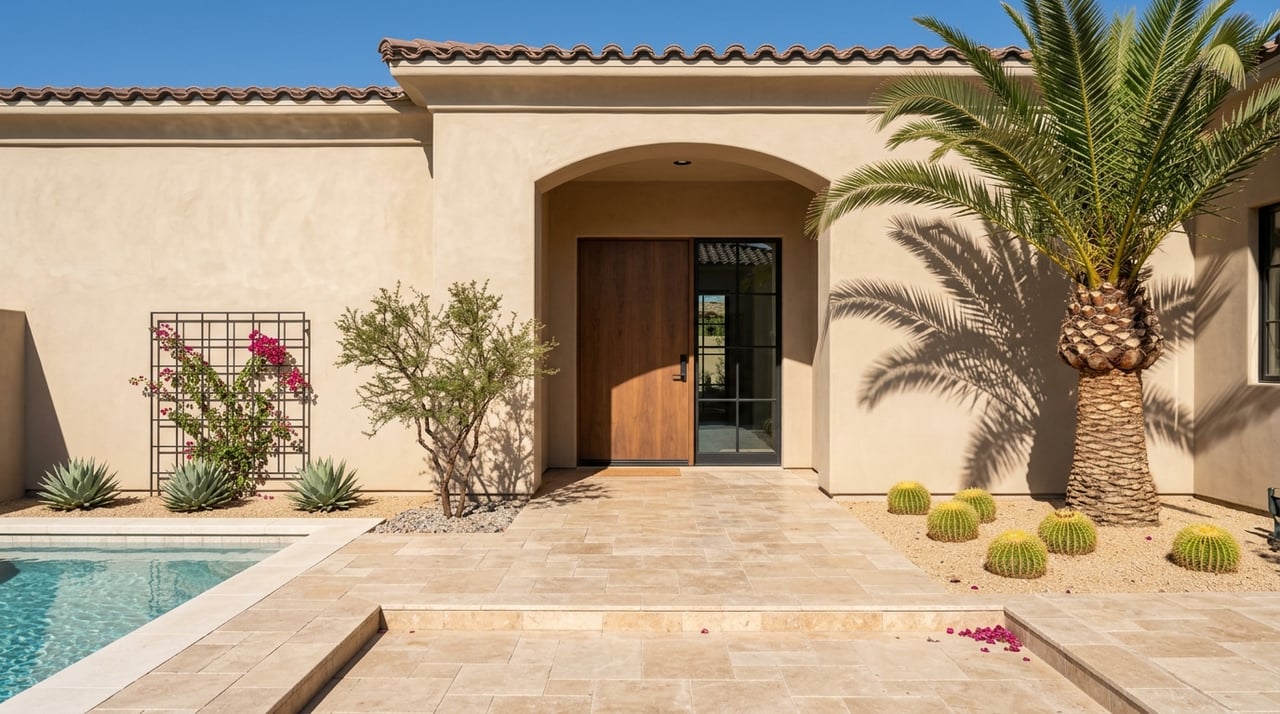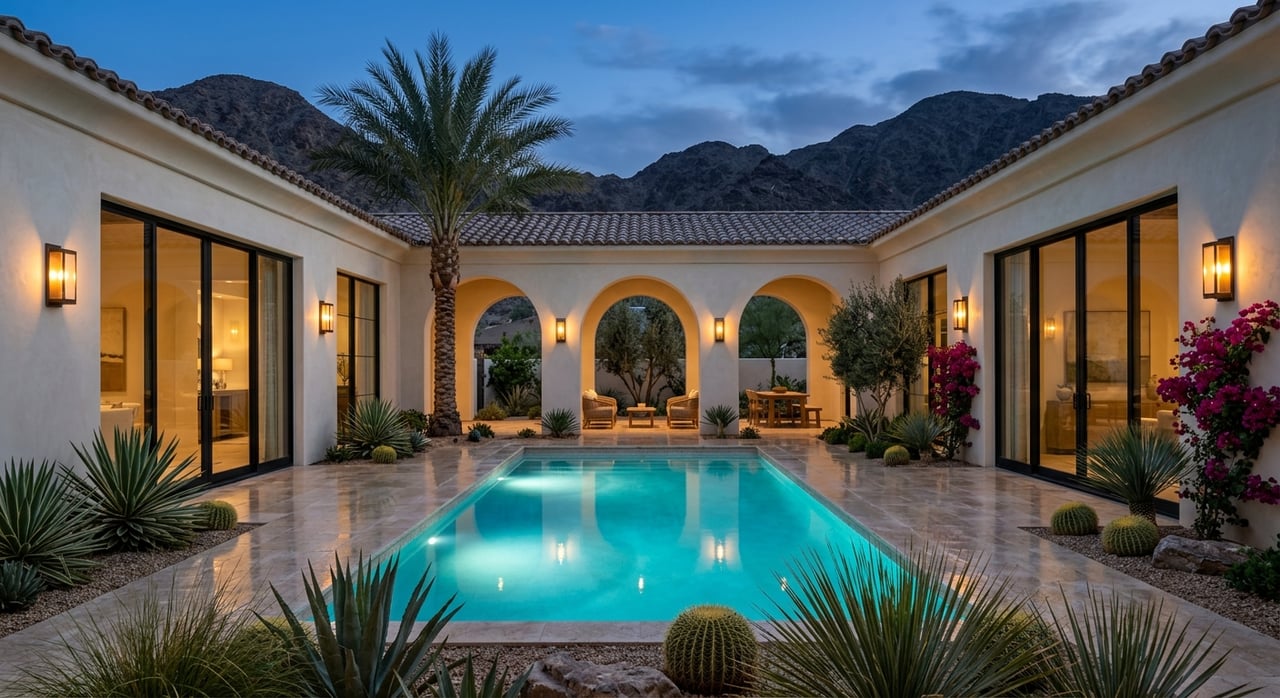
A buyer finds an Indian Wells home listed with a rental history attached. The current owner has been renting it for years, the listing agent mentions strong returns during tournament season, and the buyer's spreadsheet pencils out a healthy return on a golf-adjacent property near the Tennis Garden. The offer gets written on the assumption that the rental business transfers with the deed.
It doesn't. Indian Wells' own municipal code states plainly that a short-term rental license or permit is void the moment the registered property sells. Whatever income history the seller can show you, whatever occupancy rate their property management company reports, none of it transfers. A new owner starts at zero and has to apply for a new permit under their own name before they can legally book a single night under 30 days.
That single clause changes how an investor should read every Indian Wells rental number floating around the internet. Here's what the ordinance allows, how rental revenue estimates compare with it, and how Indian Wells compares to nearby cities.
The Short-Term Rental Rule
Indian Wells' short-term rental ordinance, Chapter 5.20 of the municipal code, sets a citywide minimum stay of 29 consecutive nights for any new short-term rental license or permit. That single rule eliminates the classic weekend-turnover Airbnb model for the vast majority of the calendar year. The city carved out exactly one exception, tied to a single event: an owner who registers a property may rent it for no less than seven consecutive nights during the window beginning one week before the annual professional tennis tournament at Indian Wells Tennis Garden and ending three days after it concludes.
That tournament is the BNP Paribas Open, held at the Indian Wells Tennis Garden. The 2026 edition ran March 1 through March 15, and running the ordinance's own math against those dates puts the exception window at roughly late February through mid-March, about three and a half weeks out of fifty-two. The same formula repeats every year on whatever dates the tournament lands. Outside that stretch, a compliant Indian Wells short-term rental is a month-plus lease, not a nightly one.
Homeowners associations can opt out of the minimum-stay requirement at the property level, which sounds like a workaround until you read the fine print. STR Profit Map says the opt-out only waives the stay-length rule. The owner still has to obtain a license. The City of Indian Wells says owners must still remit the city's 12.25% transient occupancy tax every quarter and meet every other requirement in the ordinance, from a 24/7 local contact to the noise standards that apply between 10 p.m. and 7 a.m. An HOA opt-out gets you flexibility on stay length. It does not exempt you from the rest of the rulebook, and it does nothing to change what happens when the property sells.
Rental Revenue in Context
Search for Indian Wells short-term rental income and you'll find figures in the range of $249 to $300 a night, occupancy in the 60 to 71 percent range, and annual revenue estimates from roughly $68,000 up past $120,000 for well-managed luxury properties. Those numbers describe what a nightly rental could theoretically earn if it operated as a nightly rental year-round. The ordinance says most Indian Wells properties cannot legally do that outside the tournament window unless the specific HOA has filed an opt-out and the owner has built an operation around a three-and-a-half-week peak plus a series of 29-night-minimum stays the rest of the year.
One data point in the same research makes the point better than any of the headline figures. Alongside the $68,000-to-$95,000 estimate for a well-managed property, at least one rental-analytics source puts median Indian Wells host earnings at roughly $15,490 a year. That gap between the best-case number and the median is close to what you would expect if most owners in the city are legally confined to a short tournament window plus a string of month-plus leases, while only a handful have HOA opt-outs or fall under the older, narrower permit categories that allow more frequent turnover.
The difference between a nightly-rental estimate and the legal limits is important when evaluating a property. A property that pencils out at $95,000 a year on a nightly-turnover model is not the same asset as one legally restricted to a tournament week plus month-long leases. The second model still produces income, particularly across the BNP Paribas Open window and the broader November-through-April snowbird season when demand for 29-night-plus stays is strongest. But it is a different business than the one implied by an ADR figure borrowed from a nightly-rental comp set.
Where Indian Wells Sits Against Its Neighbors
Every Coachella Valley city writes its own short-term rental rules, and none of them match. That matters more than it sounds, because a buyer comparing Indian Wells to La Quinta or Palm Desert on price per square foot is comparing four different regulatory regimes as if they were one market.
| City | Minimum stay for new permits | What a new owner gets | Occupancy tax |
|---|---|---|---|
| Indian Wells | 29 nights year-round, 7-night exception during the BNP Paribas Open window | Permit is void on sale; must reapply from scratch | 12.25%, remitted quarterly |
| La Quinta | BNBCalc reports that new General and Primary permits stopped issuing May 20, 2021 | A council-certified large lot of 25,000+ square feet is an exception | Transient occupancy tax and assessment apply |
| Palm Desert | eCode360 lists a minimum stay of 3 days, 2 nights | The City of Palm Desert says a new owner must submit a fresh application | 11% plus 1% Tourism Business Improvement District assessment |
| Indio | BNBCalc reports no citywide minimum stay | The City of Indio says the permit is not transferable to a new owner, entity, or parcel; annual permit currently runs $1,633 combined with the business license | Transient occupancy tax and assessment apply |
Read across that table and the pattern is the opposite of what the demand data suggests. Indian Wells has the single biggest annual demand spike in the valley, thanks to a tournament that drew roughly 504,268 spectators to the Tennis Garden in 2025. It also has the most restrictive year-round rental structure of the four cities in this comparison, tighter than La Quinta's permit freeze in practice, and tighter than Palm Desert or Indio, where a two-night or zero-night minimum still allows a genuine weekend rental business for a new owner willing to do the paperwork.
Palm Desert adds its own wrinkle worth knowing if you're looking at a hillside property. Existing off-site short-term rental permits in the city's Hillside Planned Residential zone terminate permanently on December 31, 2026, with no replacement permits issued after that date. If a Palm Desert listing in that zone is being marketed on the strength of current rental income, that income has a hard stop written into the ordinance.
What This Means If You're Comparing Cities on Rental Strategy
If nightly turnover income is the priority, Indian Wells is not the city built for it. Indio's combined permit and business license process, with no citywide minimum stay, is structurally the most permissive of the group. Palm Desert's two-night minimum still supports a real weekend rental business, provided the property sits outside the Hillside Planned Residential zone and the HOA issues the annual Letter of Approval the city requires. La Quinta has a narrow large-lot exception.
Indian Wells works differently. The property is better suited to an owner who wants a personal retreat near the Tennis Garden and The Reserve, plans to use the home during the tournament and the winter season, and is comfortable treating any rental income as a 29-night-plus lease business for the rest of the year rather than a nightly hospitality operation. The tournament week itself can still generate real income under the ordinance's exception, but only if the license is already in place before the window opens, since a permit filed mid-tournament does the buyer no good for that year's dates.
The city does require this to be disclosed. Every agreement for the sale of Indian Wells real property must include language stating that the buyer is aware the city regulates short-term rental use and has read the ordinance. That disclosure protects the transaction. It doesn't change the outcome for a buyer who assumed the rental business was included in the price.
A Few Quick Answers
Does the HOA opt-out mean I can rent nightly year-round? No. It removes the minimum-stay requirement only. The license, the 12.25% transient occupancy tax, the local contact requirement, and the noise rules still apply in full.
If I close escrow the week before the tournament, can I rent that week? Only if a valid permit is already registered to you before the window opens. The permit is tied to the owner on file, and a permit does not follow the deed at closing.
Is there any circumstance where a permit transfers with the property? The ordinance makes an exception for new developments of at least 10 residential units built under a specific conditional use permit and development agreement with the city. Outside that narrow case, every Indian Wells short-term rental license starts over with each new owner.
None of this makes an Indian Wells property a poor investment. It makes it a different investment than the ADR figure on a rental analytics site suggests, and that difference belongs in the offer, not discovered after close. Before writing a number into a pro forma for a specific Indian Wells address, confirm the property's permit status, its HOA's opt-out standing, and whether the current license is even still active, because none of that survives the sale automatically.
If you're weighing an Indian Wells purchase against another Coachella Valley city and want the rental math run correctly before you write an offer, Nyla Doering can walk through what a specific address is actually permitted to do, and how that compares with the listing.
This article is general information, not legal, tax or financial advice. Consult a qualified professional about your situation.